Who We Are
Founded in 2021, Tahaleel Limited is a data- and people-driven consultancy that builds data in and analyses fragile and conflict-affected economies across the Middle East and Africa.
Through its team of best-in-class field researchers, data analysts, and consultants located in and focused on the Levant, Arabian Peninsula, and wider Middle East and Africa, Tahaleel builds bespoke datasets where no data seemed available.
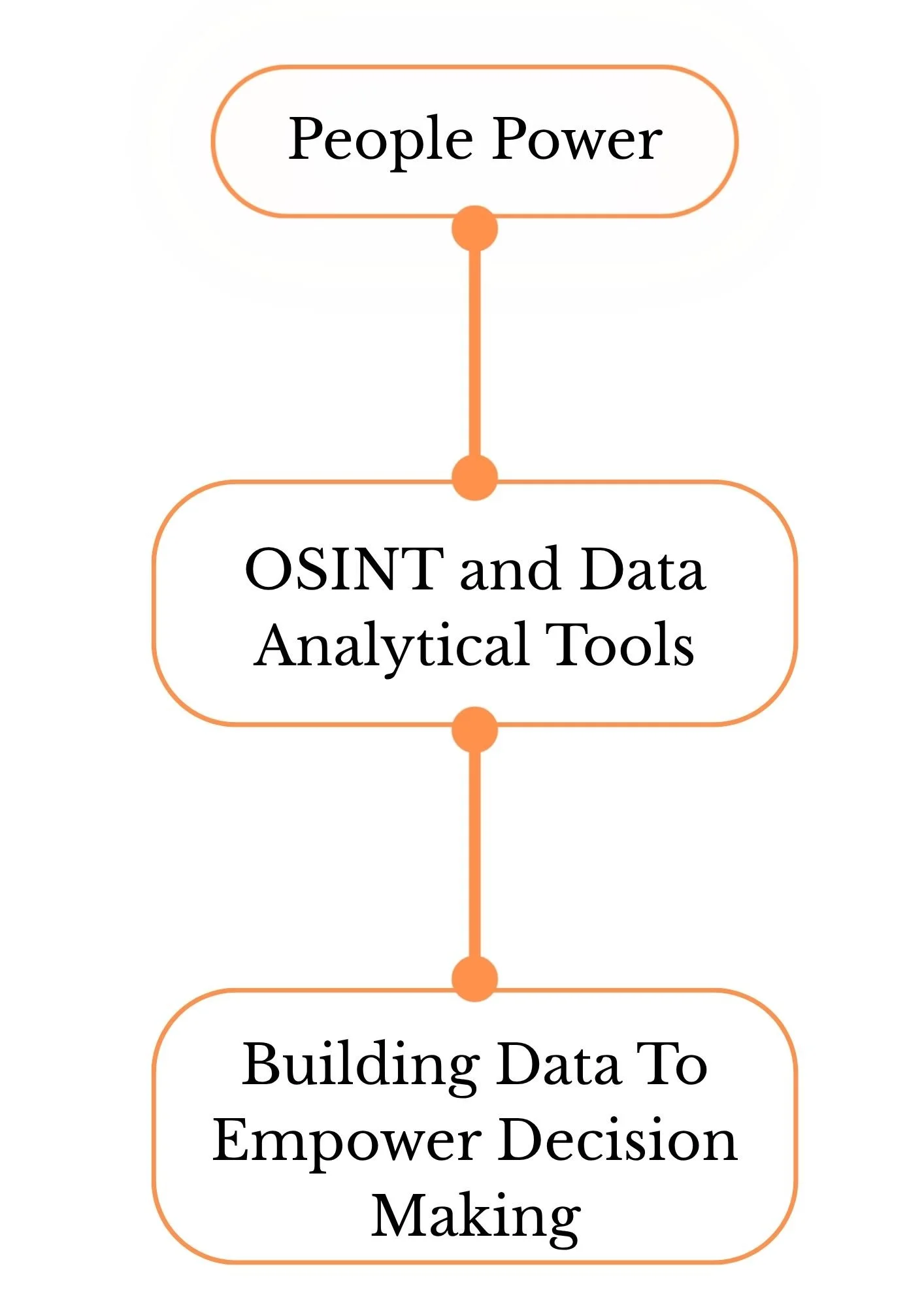
Our multidisciplinary research approach blends people power with advanced OSINT and data analytical tools. And our data access and building capacity are further enhanced by deep insights presented clearly and with creativity.
Our analytical products empower operational, strategic, and commercial decision making for public and private sector actors seeking to understand and effectively navigate complex and high-risk areas.
Tahaleel provides deep insights from the field that enable clients to see a fuller picture.
We build and analyse data where there was none before.
Qataniyeh Oil Field, Syria
This case study demonstrates how Tahaleel integrates field networks with advanced data analysis to build and interpret bespoke datasets. Using night lights reflectance (NLR) data and Sentinel-5P satellite imagery, we measured oil production and air quality dynamics at the Qataniyeh oil field in Syria’s Qamishli district.
There is no publicly-available oil production data for the Qataniyeh oil field. Tahaleel identified and analysed key production metrics.
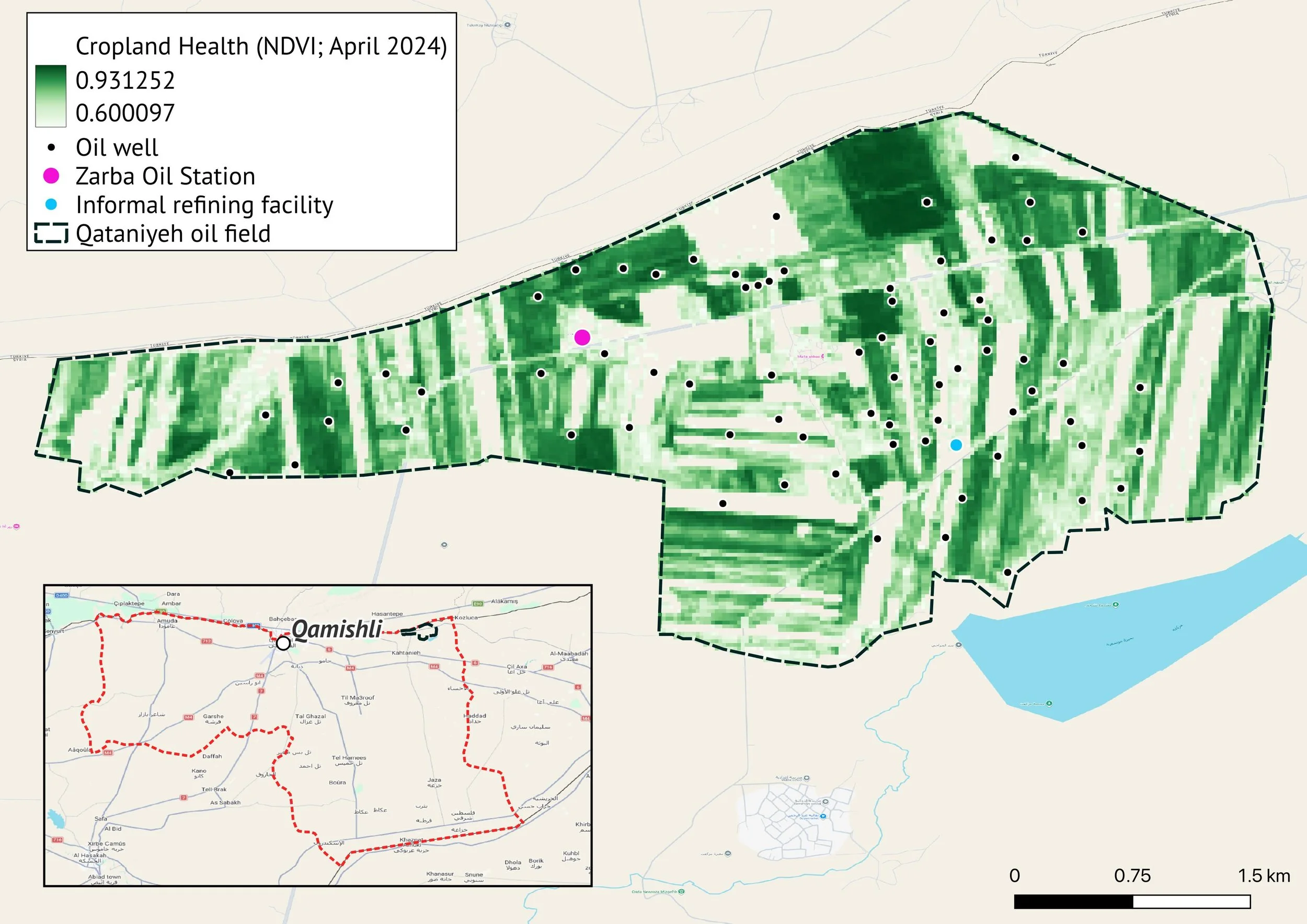
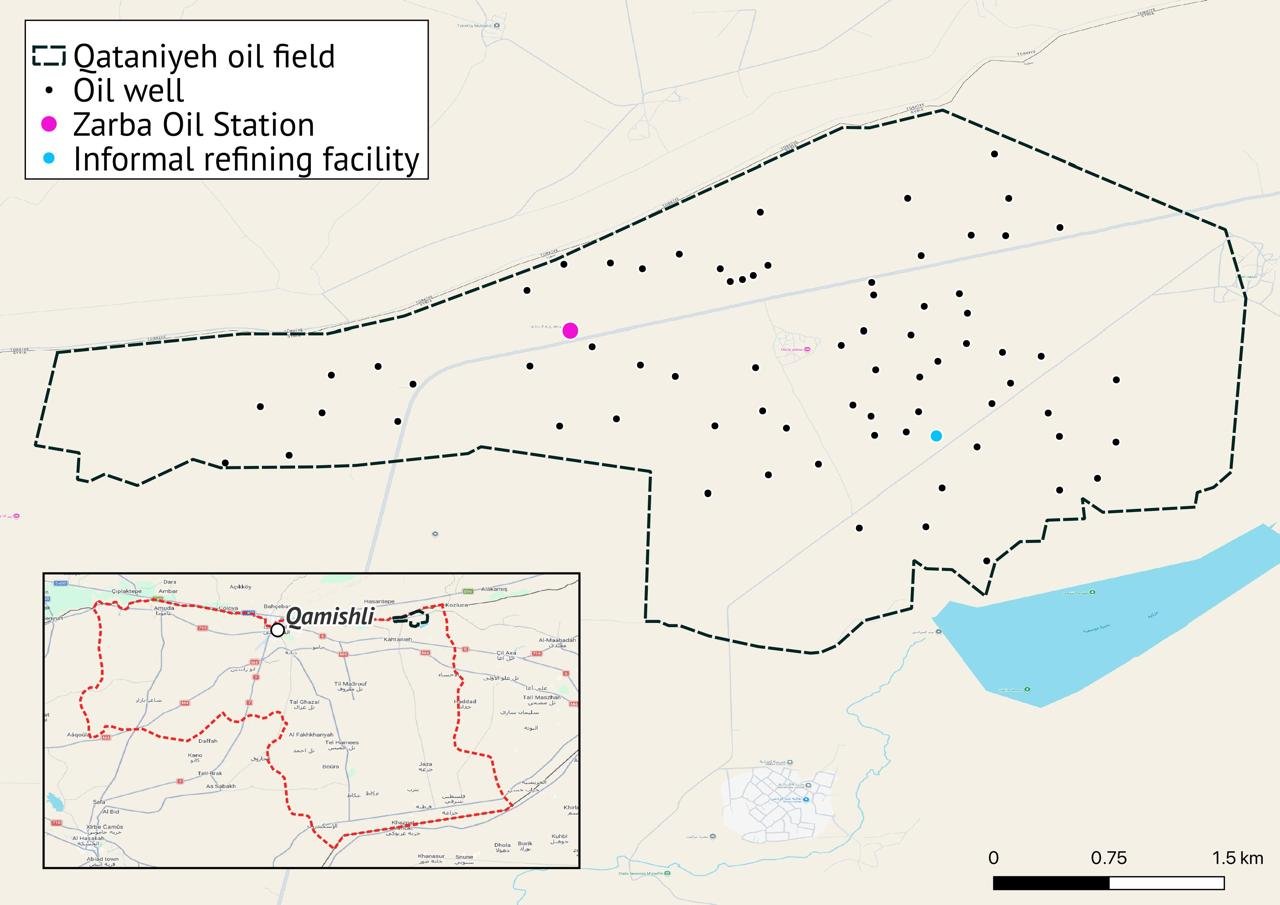
According to high resolution satellite imagery, the Qataniyeh oil field contains the Zarba Oil Station, 71 oil wells, and one informal oil refining facility.
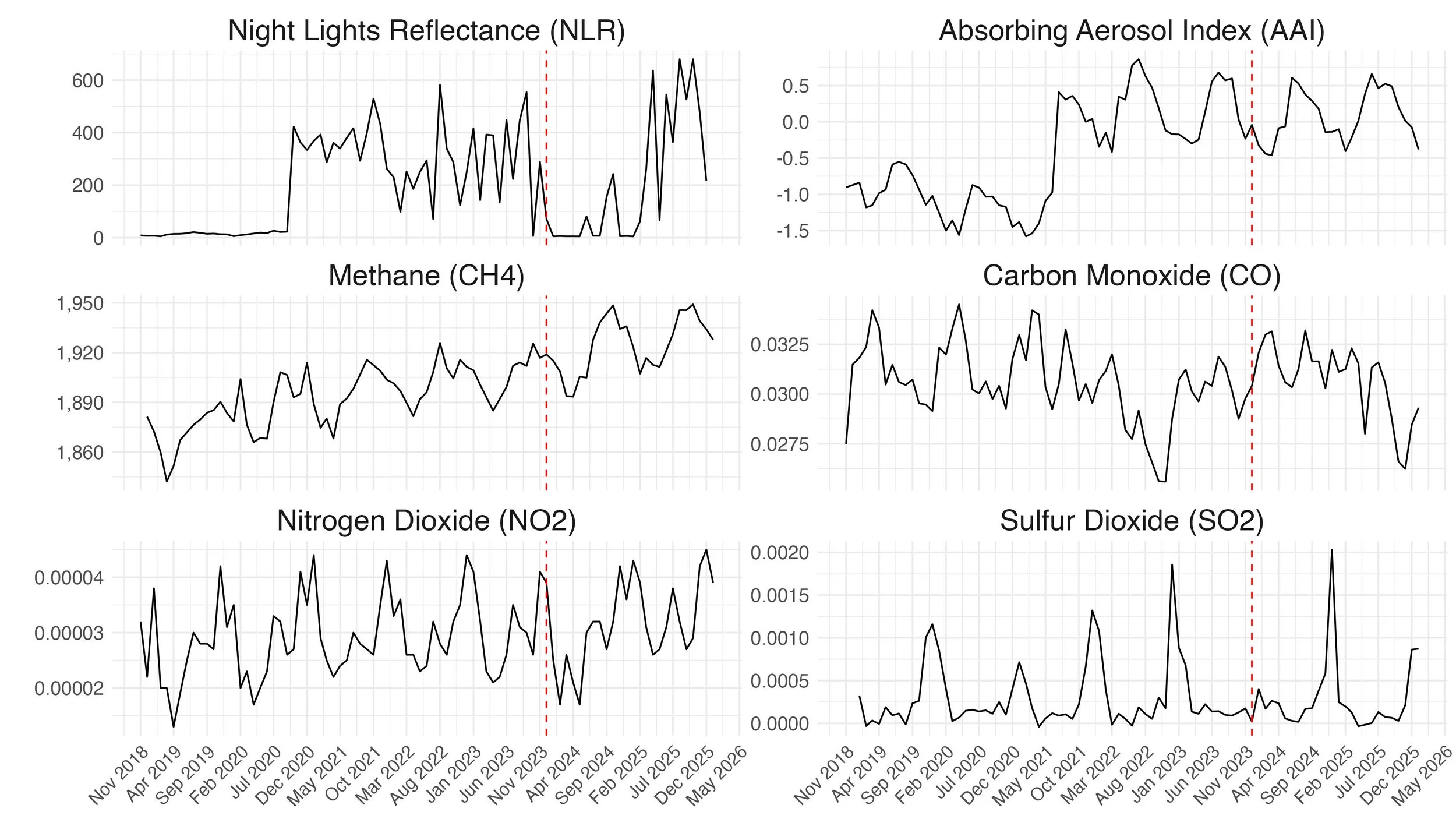
The NLR data indicates that the Zarba Oil Station resumed sustained oil processing in October 2020 after being effectively offline since June 2013.
Sentinel-5P air quality indicators observed over the broader oil field during this period reinforce this interpretation.
The extent and health of cropland in the Qataniyeh oil field in April 2024 was identified and measured using the Landsat satellite.
To test whether pollution caused by oil facilities negatively impacted crop performance, the health of cropland within 100 meters of an oil facility was compared to cropland outside of these areas.